
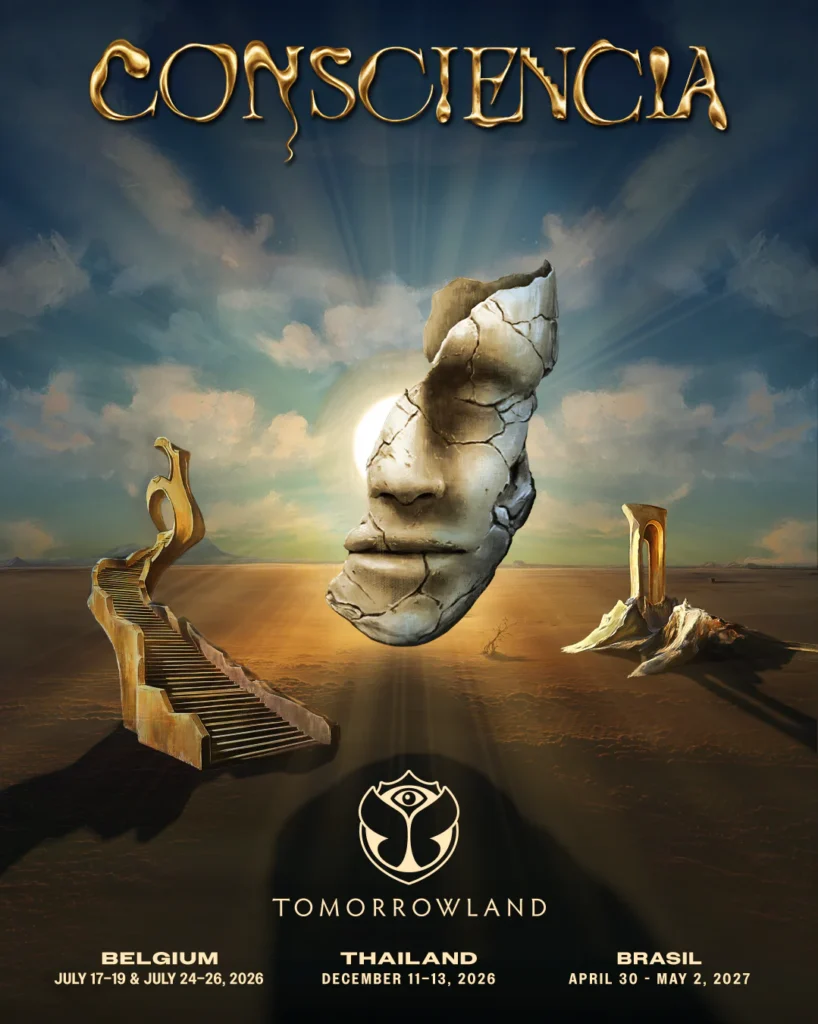
In an era where electronic music festivals are increasingly measured by scale, spectacle, and streaming reach, Tomorrowland is taking a decisive step in a different direction—one rooted in narrative depth, emotional architecture, and long-term creative continuity. The unveiling of its newest theme, “Consciencia,” signals not just another annual reinvention, but the beginning of the first multi-year thematic arc in the festival’s history, a structural shift that fundamentally redefines how Tomorrowland builds its world both on-site and across its global broadcast platforms.
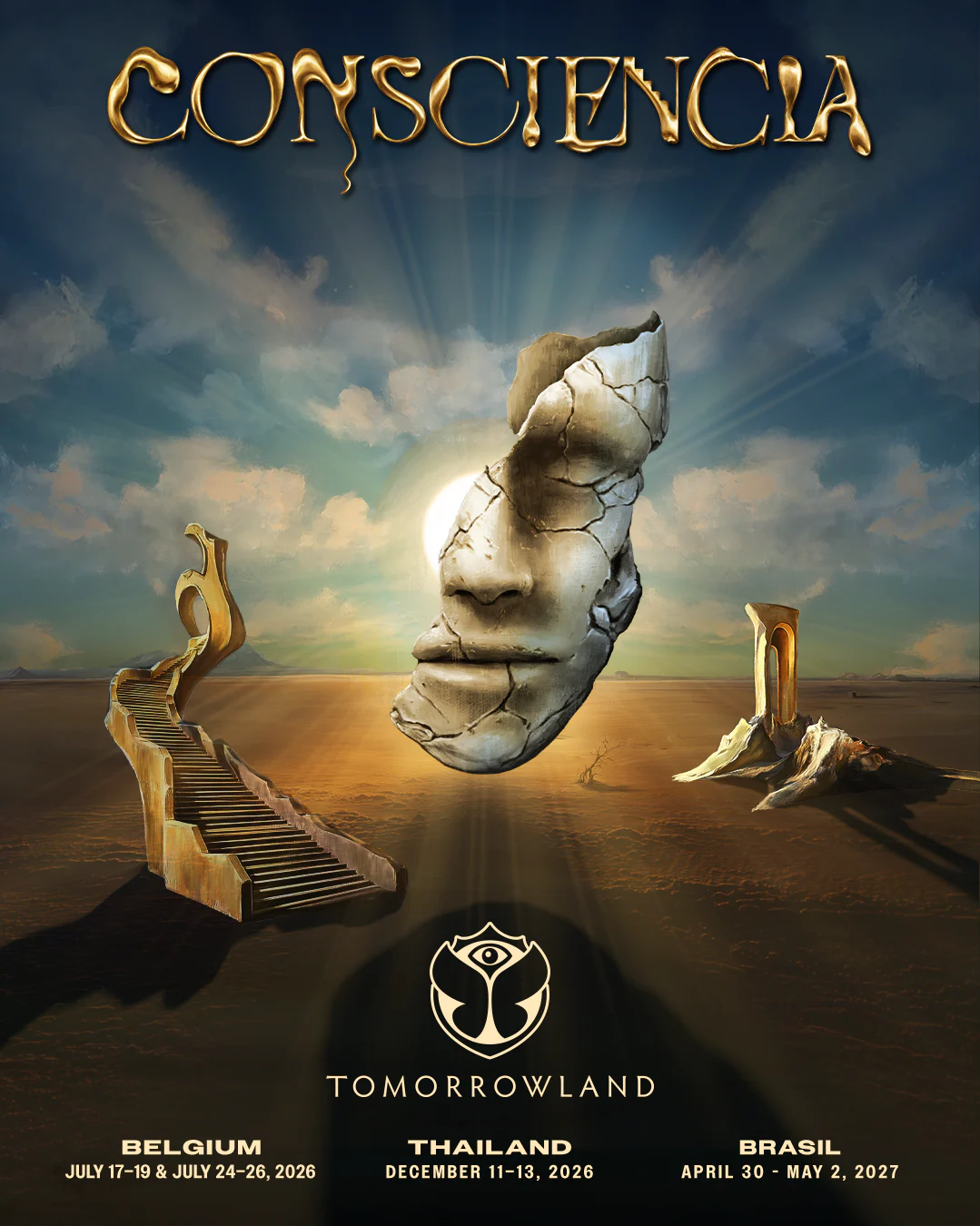
“Consciencia” is not designed as a fleeting visual motif or aesthetic wrapper. It is conceived as an evolving universe—one that explores the internal landscape of human emotion through a carefully constructed framework centered on six core forces: Wonder, Love, Anger, Joy, Desire, and Sadness. These are not abstract concepts deployed for branding; they function as narrative anchors, shaping stage design, musical programming, visual storytelling, and the broader experiential ecosystem that defines Tomorrowland Live. In practical terms, this creates a multi-dimensional festival environment where each performance, stage, and broadcast segment operates within a cohesive emotional blueprint, allowing audiences—both in attendance and watching globally—to engage with the event on a deeper psychological and sensory level.
This strategic shift toward a multi-year theme is a calculated evolution. Historically, Tomorrowland has been synonymous with annual reinvention—each year delivering a new world, a new mythology, and a new visual language. “Consciencia” breaks that cycle deliberately. By extending a single concept across multiple years, the festival is building continuity, enabling layered storytelling, and allowing its creative teams to expand and refine ideas over time rather than compressing them into a single edition. The result is a more immersive and sustained narrative experience, one that aligns with the growing demand for long-form content and serialized storytelling across global entertainment platforms.
From a production standpoint, this move unlocks new levels of complexity and cohesion. Stage environments are no longer isolated design statements; they become chapters within a larger story. Lighting design, visual effects, and even artist curation can now evolve in tandem with the overarching theme, creating a sense of progression that extends beyond a single weekend. For Tomorrowland Live, this translates into a more compelling broadcast product—one that feels less like a series of disconnected performances and more like a continuous, curated journey through sound and emotion.
Complementing this thematic expansion is a significant programming development that underscores Tomorrowland’s commitment to genre evolution and cultural representation. This year introduces a dedicated stage focused on deep Afro-house, marking a strategic and culturally relevant addition to the festival’s sonic landscape. Afro-house, with its intricate rhythms, percussive depth, and spiritual undertones, aligns seamlessly with the emotional framework of “Consciencia.” It is a genre that inherently communicates feeling—often without the need for language—making it an ideal vehicle for exploring themes like Desire, Joy, and even introspective states like Sadness and Wonder.
The introduction of this stage is not a peripheral addition; it represents a deliberate expansion of Tomorrowland’s musical identity. As global audiences increasingly gravitate toward Afro-influenced electronic sounds, the festival is positioning itself at the forefront of that movement, providing a dedicated platform for artists who are redefining the genre’s boundaries. This also reflects a broader industry shift, where festivals are moving beyond traditional EDM frameworks to embrace more diverse, globally influenced sounds that resonate across continents.
For Tomorrowland Live, the implications are substantial. The inclusion of a deep Afro-house stage enriches the broadcast offering, introducing new textures, rhythms, and atmospheres that diversify the viewing experience. It allows the platform to showcase a broader spectrum of electronic music culture, appealing to both core fans and new audiences discovering the festival through its global streams. This is particularly critical in a landscape where digital engagement is as important as on-site attendance, and where content differentiation can define a platform’s long-term relevance.
At its core, the convergence of “Consciencia” and the Afro-house expansion reflects a larger strategic vision: to transform Tomorrowland from a festival into a sustained cultural narrative. This is no longer just about delivering peak moments—it is about building a universe that audiences can return to, explore, and emotionally invest in over time. The six emotional pillars provide a framework that is both universal and adaptable, allowing the festival to resonate across diverse audiences while maintaining a clear and consistent identity.
This evolution also reinforces Tomorrowland’s position within the global festival ecosystem. While many events continue to compete on scale and lineup alone, Tomorrowland is doubling down on experience design, narrative cohesion, and cultural relevance. The move toward a multi-year theme introduces a level of strategic continuity that is rare in the festival space, offering both creative stability and the flexibility to innovate within a defined structure.
For artists, this creates new opportunities for alignment and expression. Performances can be curated to reflect specific emotional themes, enabling deeper connections between the music and the audience. For production teams, it provides a roadmap for long-term development, allowing for more sophisticated stage builds and visual concepts that can evolve year over year. And for audiences—whether physically present or engaging through Tomorrowland Live—it delivers a richer, more immersive experience that extends beyond individual sets or stages.
Ultimately, “Consciencia” represents a pivotal moment in Tomorrowland’s trajectory. It is a shift from annual spectacle to sustained storytelling, from isolated experiences to interconnected narratives, and from genre boundaries to a more expansive, globally informed musical identity. The addition of a dedicated Afro-house stage further amplifies this direction, reinforcing the festival’s commitment to innovation, diversity, and emotional resonance.
As Tomorrowland Live prepares to bring this new era to a worldwide audience, the message is clear: the festival is not just evolving—it is redefining what a global music experience can be. Through “Consciencia,” Tomorrowland is building something more enduring than a lineup or a stage—it is constructing a living, breathing universe driven by emotion, sound, and the collective energy of a global community.