
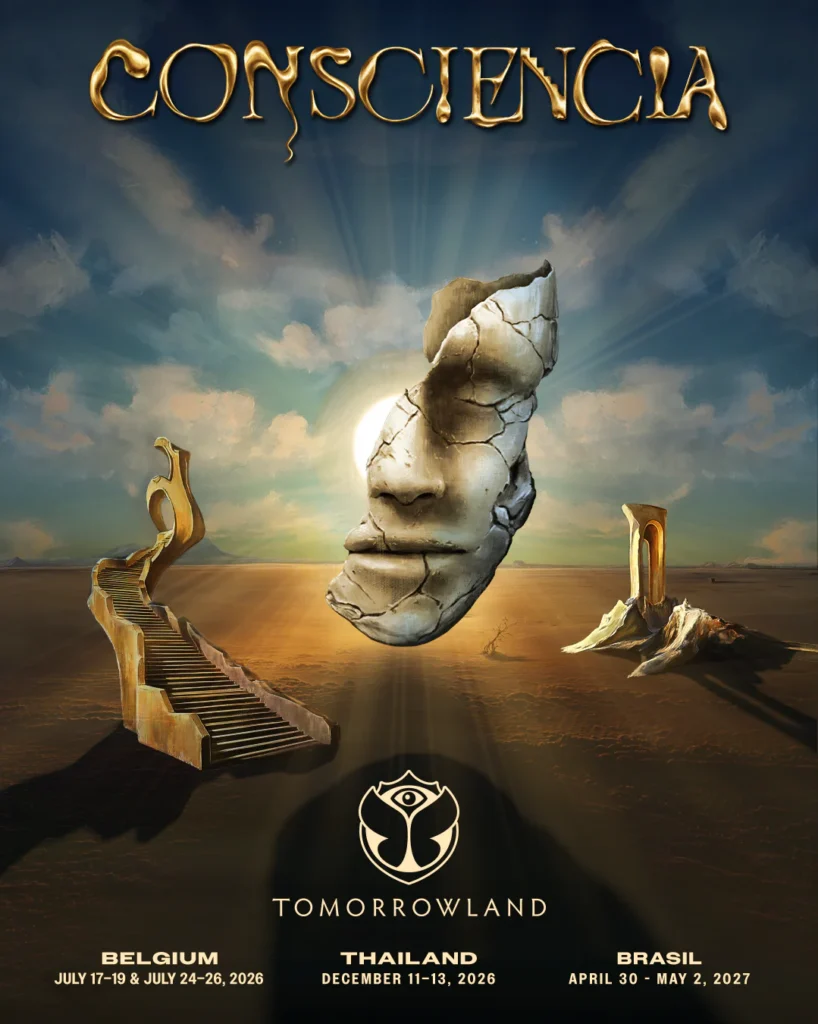
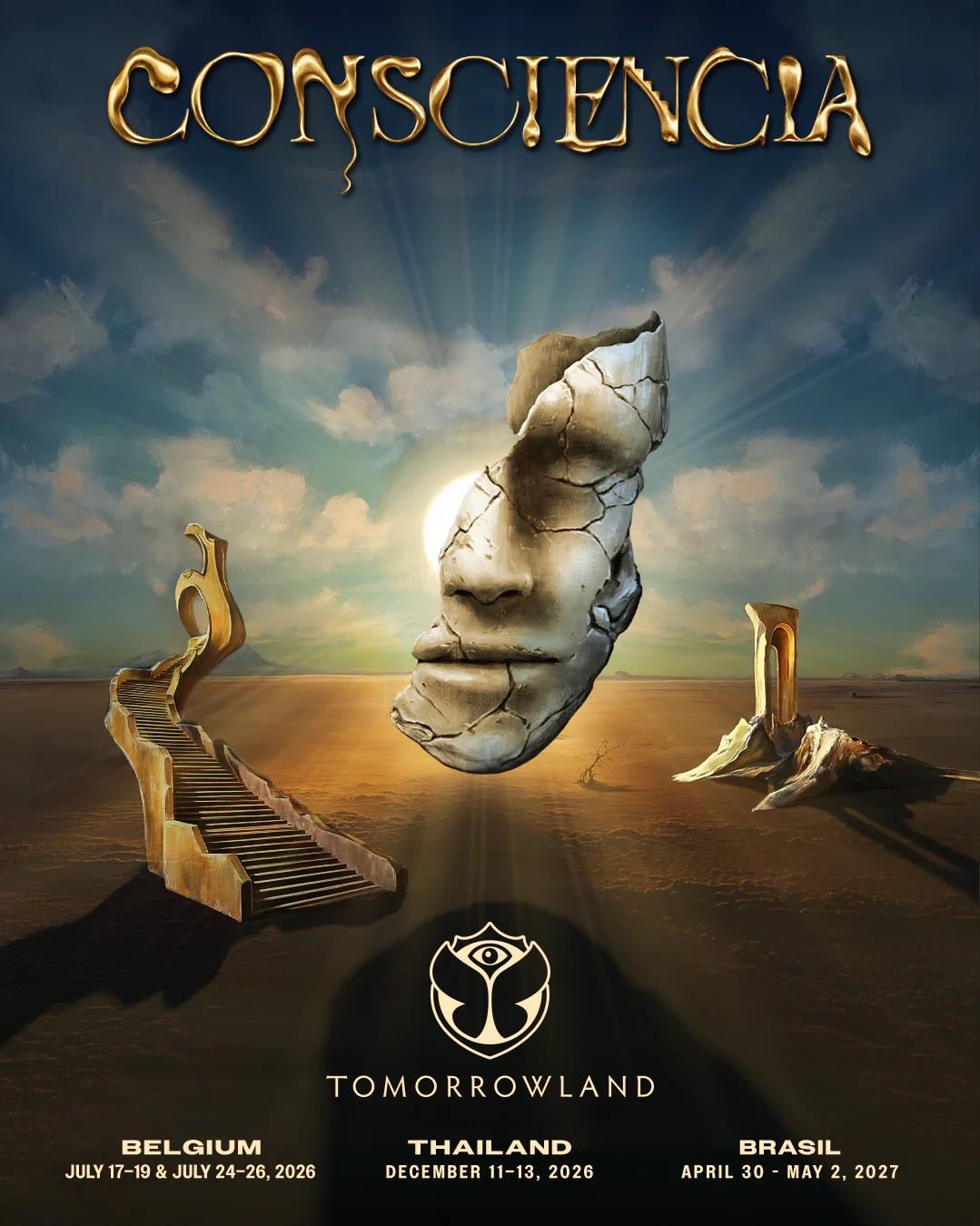
For decades, Tomorrowland has stood as the defining symbol of large-scale electronic music spectacle. The Belgian festival transformed itself from a major European dance event into a global cultural phenomenon built on fantasy storytelling, architectural stage design, cinematic visuals, and the largest names in mainstream EDM. Yet as Tomorrowland prepares for its highly anticipated July 2026 edition under the unified global “CONSCIENCIA” theme, the festival appears ready to make one of the boldest artistic pivots in its entire history.
The shift is not simply visual.
It is musical, cultural, structural, and philosophical.
Tomorrowland Belgium 2026 is increasingly shaping up to become a landmark moment in the evolution of global electronic music festivals because the organization is openly embracing underground electronic subcultures and elevating them to the center of the festival experience itself. Genres that once thrived primarily inside dark warehouses, underground clubs, afterhours circuits, and niche dance communities are now moving directly onto some of the biggest festival stages in the world.
The significance of that transformation cannot be overstated.
For years, the iconic Tomorrowland Mainstage represented the global epicenter of commercial festival EDM. Massive Big Room drops, progressive house anthems, crossover dance-pop records, and arena-scale production dominated the sonic identity of the festival’s largest performance environments. While underground sounds always existed throughout Tomorrowland’s sprawling stage ecosystem, they rarely occupied the symbolic center of the event itself.
That dynamic is now changing dramatically.
The 2026 edition signals a clear recognition that electronic music culture has evolved far beyond the formulas that dominated the peak EDM explosion of the early-to-mid 2010s. Audiences worldwide are increasingly gravitating toward darker, faster, more rhythmic, and emotionally immersive styles of dance music. Hard Techno, industrial techno hybrids, deep Afro-House, melodic tribal rhythms, and underground-driven high-BPM sounds have surged across global club culture, social media platforms, streaming ecosystems, and major festivals simultaneously.
Tomorrowland is not resisting that evolution.
It is embracing it completely.
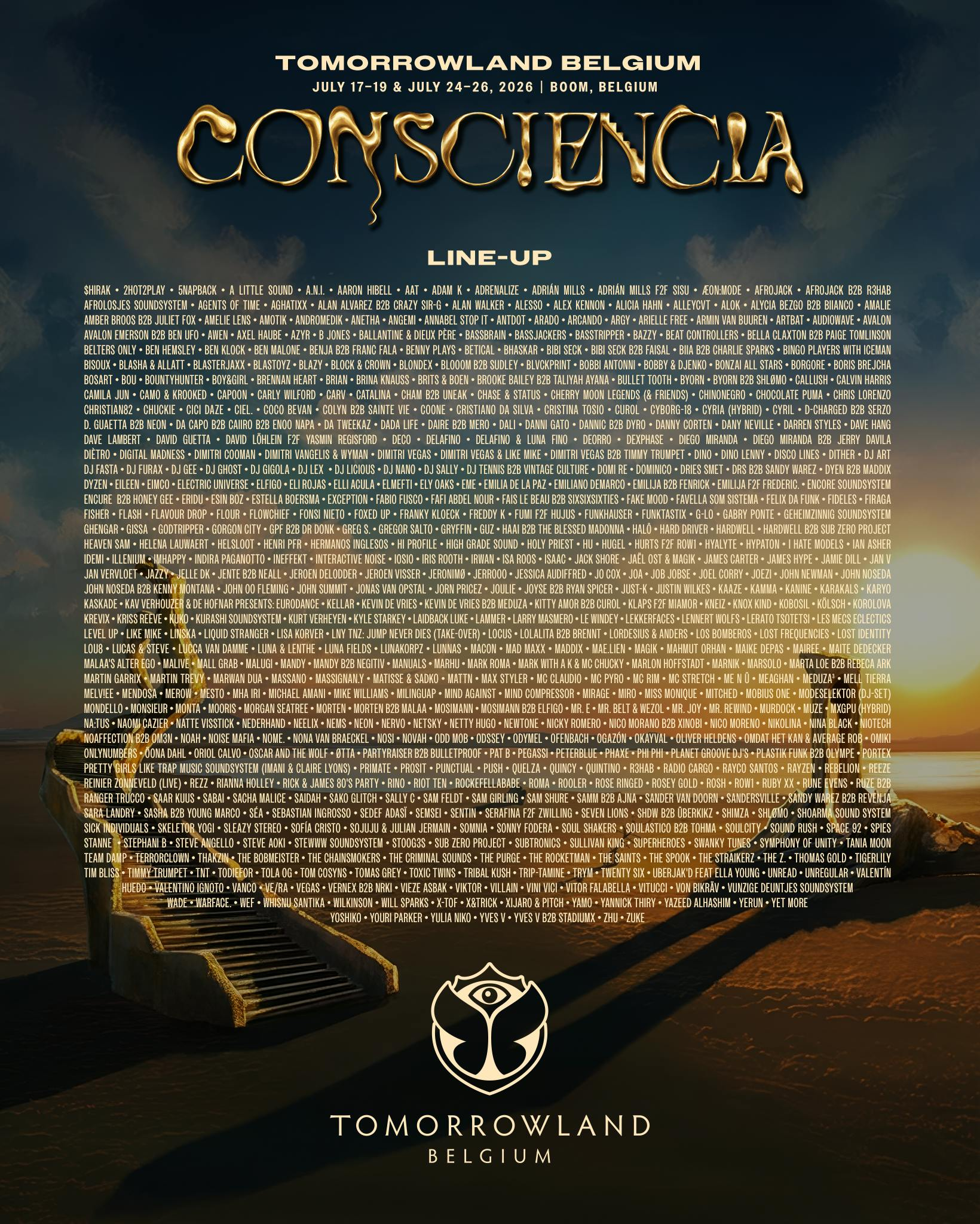
Perhaps the clearest symbol of this shift is the arrival of the Hard Techno wave directly onto the Mainstage itself. Few artists embody that transition more than Marlon Hoffstadt, whose explosive rise has helped redefine the boundaries between trance nostalgia, eurodance energy, rave culture, and modern techno aggression. Operating under the nickname “DJ Daddy Trance,” Hoffstadt has become one of the most fascinating figures in contemporary electronic music because he merges euphoric melodic structures with relentless high-BPM intensity in a way that feels both nostalgic and futuristic simultaneously.
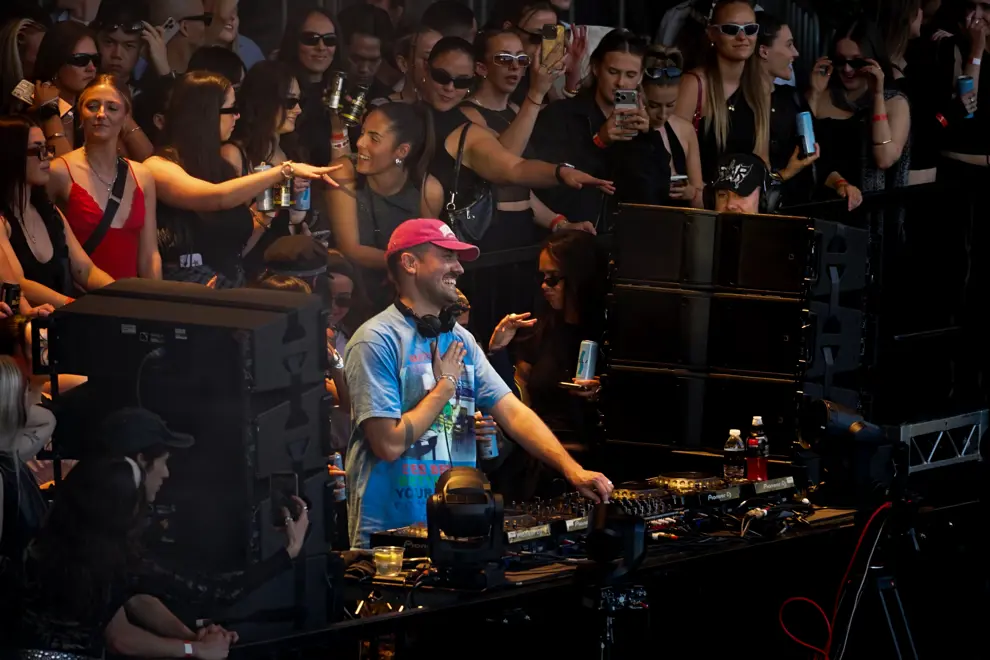
For years, sounds like his existed primarily in underground rave circuits and smaller club-focused festival environments. Seeing an artist associated with retro rave aesthetics and hard-driving trance-techno hybrids elevated toward Tomorrowland’s largest stages signals a profound recalibration of the festival’s musical identity.
The same applies to NOVAH, the rapidly ascending Belgian hard-techno force whose inclusion further confirms Tomorrowland’s commitment to showcasing aggressive underground energy at the highest possible level. Her rise represents a broader cultural moment happening throughout European dance music, where harder and faster sounds are no longer niche alternatives operating outside the mainstream festival ecosystem. They are becoming the mainstream themselves.
That evolution reflects larger changes occurring within youth culture globally.
Modern dance audiences increasingly crave intensity, physicality, catharsis, and immersive movement rather than formulaic commercial festival structures. Hard Techno delivers precisely that experience. The music feels visceral, relentless, emotionally charged, and physically consuming in ways traditional pop-EDM often no longer achieves for younger audiences raised inside hyper-accelerated digital culture.
Tomorrowland’s decision to position artists like Marlon Hoffstadt and NOVAH in highly visible environments therefore represents more than simple lineup diversification. It acknowledges that underground club culture is now actively reshaping the center of the global festival industry itself.
Even more revealing is the announcement of the world premiere Hardwell b2b Sub Zero Project performance at The Great Library Stage. That collaboration alone may become one of the defining electronic music crossover events of 2026 because it unites two historically separate worlds that rarely fully converge at this scale.
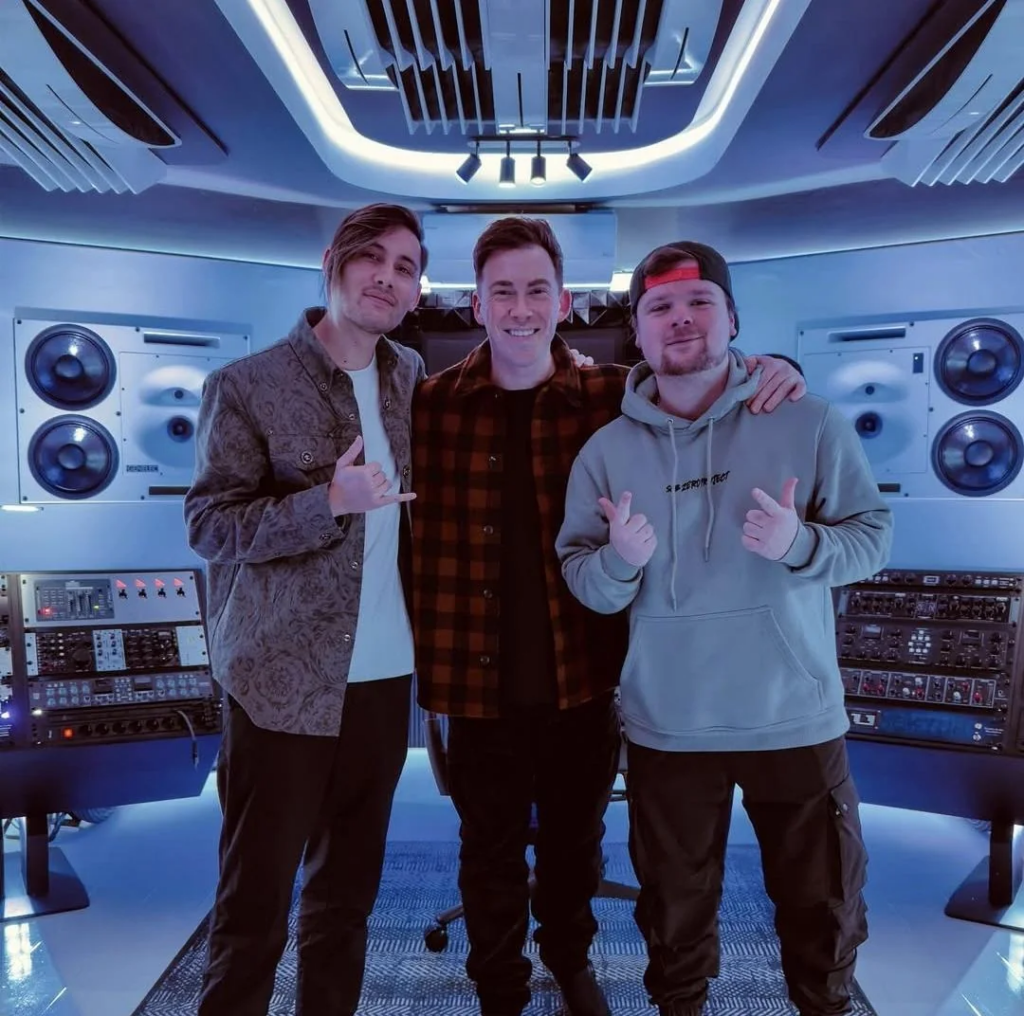
Hardwell remains one of the most recognizable architects of the original Big Room festival era, helping define the sound of massive EDM festivals throughout the 2010s. Sub Zero Project, meanwhile, represent one of the dominant forces driving the current global explosion of modern Hardstyle — a genre built around hyper-aggressive kick drums, euphoric melodies, high BPM structures, and emotionally explosive festival energy.
The significance of their full-length collaborative performance lies in the fact that it is not being treated as a novelty cameo or surprise guest moment. Previous years occasionally featured brief stage crossovers between artists from different hard dance and mainstream festival worlds, but Tomorrowland 2026 is pushing much further by building a fully integrated, world-premiere set around the fusion itself.
That matters because it reflects the collapsing boundaries between electronic subgenres across the global festival landscape.
Audiences no longer consume dance music through rigid genre tribalism the way previous generations often did. Streaming culture, algorithm-driven discovery, social media clips, and massive international festival lineups have created listeners who move fluidly between techno, hardstyle, trance, house, melodic bass, Afro-house, and industrial rave sounds without treating those styles as mutually exclusive identities.
The Hardwell b2b Sub Zero Project performance embodies that new reality perfectly.
Fans can expect aggressive Big Room structures colliding directly with Hardstyle kickrolls, euphoric melodic breakdowns, techno-influenced pacing, and high-intensity festival theatrics. In many ways, the set may represent the sound of modern electronic music itself — genre-fluid, emotionally maximalist, physically overwhelming, and unconcerned with old stylistic borders.
At the same time Tomorrowland pushes toward harder and faster sounds, the festival is also expanding into one of the most spiritually resonant movements in contemporary electronic music: Afro-House.
The rise of Afro-House globally has been extraordinary over the past several years. Deep percussion, hypnotic tribal rhythms, emotional vocal textures, organic instrumentation, and spiritually immersive grooves have transformed the genre into one of the fastest-growing forces in dance music culture. Unlike the abrasive intensity of Hard Techno, Afro-House thrives on warmth, emotional movement, layered rhythm, and deeply human energy.
Tomorrowland’s response to that growth is the creation of a dedicated Afro-House sanctuary at the Melodia Stage hosted by Corona.
The importance of this move extends beyond simple genre representation. By dedicating an entire stage environment specifically to deep Afro-House culture, Tomorrowland acknowledges that the genre has evolved into one of the defining emotional and artistic movements within modern dance music.
The lineup itself reflects extraordinary depth and credibility.
The stage will be anchored by a rare three-way back-to-back performance featuring Da Capo b2b Caiiro b2b Enoo Napa — three artists widely respected for helping shape the global Afro-house and Afro-tech movement. Their collective presence immediately positions Melodia as one of the most culturally significant stages at the entire festival.
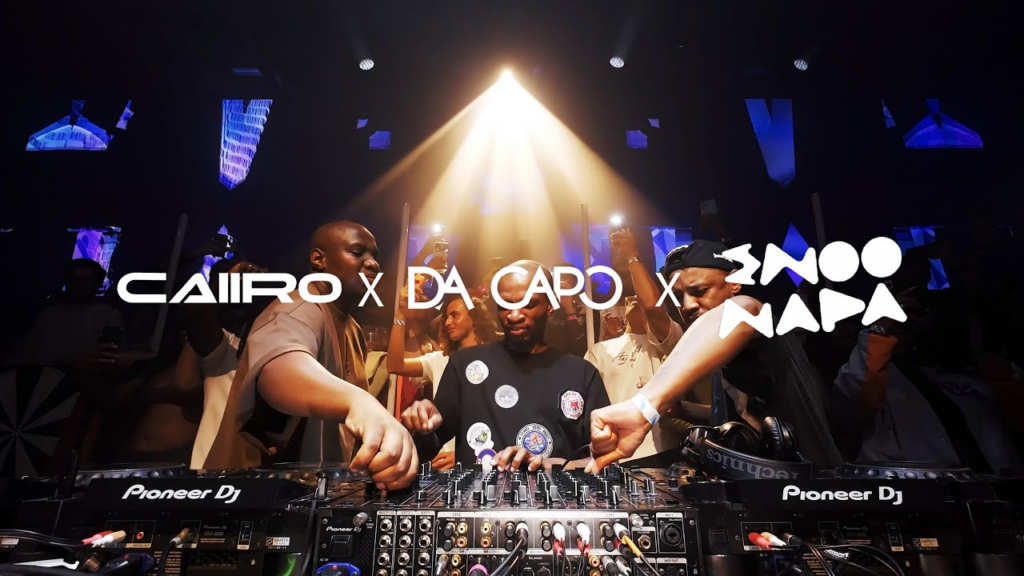
Additional artists including AWEN, Danni Gato, Thakzin, Rosey Gold, and Vanco further reinforce the stage’s commitment to authentic deep rhythmic storytelling rather than trend-driven tokenism.
That authenticity matters enormously because Afro-House is not simply another dance subgenre. It carries deep cultural, spiritual, and emotional dimensions that rely heavily on atmosphere, groove, movement, and human connection. Tomorrowland appears determined to preserve those qualities by building an environment specifically designed around immersion rather than overcrowded spectacle.
Yet perhaps the most revolutionary aspect of Tomorrowland Belgium 2026 is not a specific lineup booking at all.
It is the introduction of the entirely new “Face 2 Face” performance setup.
The F2F concept fundamentally reimagines how DJs and audiences physically interact inside festival spaces. Instead of performers standing side-by-side facing outward toward a massive crowd, Tomorrowland is placing artists in opposing booths directly facing one another. In many cases, the setup positions the DJs sideways to the audience or directly inside the center of the dancefloor itself.
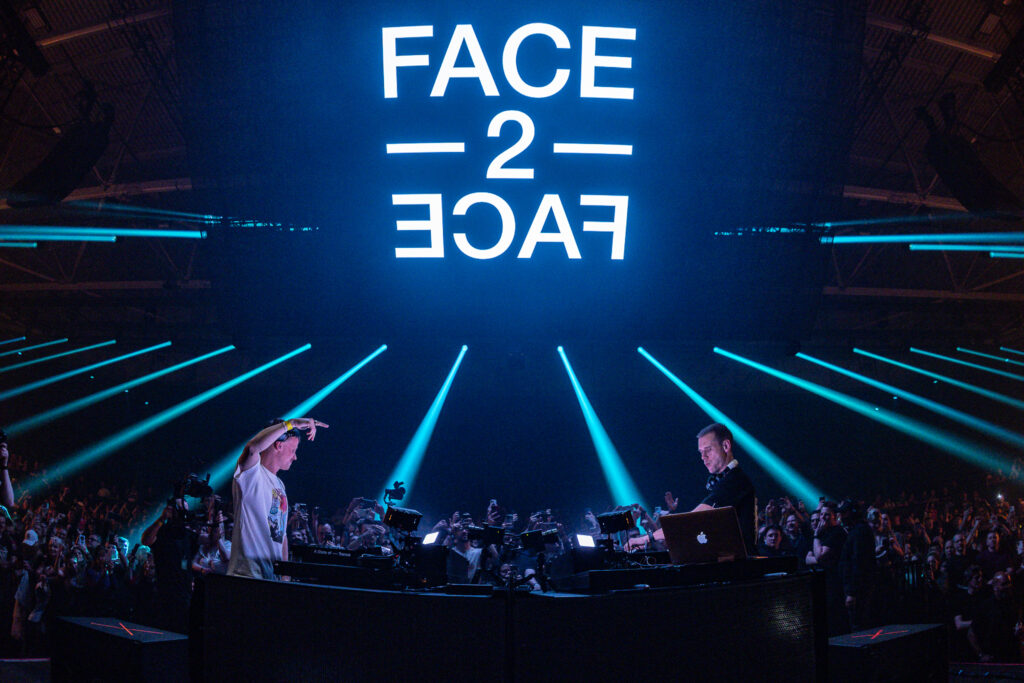
The result transforms the dancefloor into the actual focal point of the performance.
Rather than staring toward one giant production structure, audiences become embedded within the energy exchange happening between the artists. The atmosphere becomes more intimate, reactive, confrontational, and emotionally immersive. Every transition, build, reaction, and improvisational moment unfolds directly within the surrounding crowd environment.
The setup evokes underground boiler-room culture, warehouse rave dynamics, and high-stakes musical duels simultaneously.
Confirmed Face 2 Face performances already include Adrian Mills F2F SISU, Serafina F2F Zwilling, Emilija F2F Frederic Selected, David Lohlein F2F Yasmin Regisford, FUMI F2F Hujus, Hurts F2F ROW 1, and Klaps F2F Miamor. The emphasis on techno-oriented artists within the concept makes perfect sense because the format thrives on tension, pacing, rhythmic interplay, and live energy exchange between performers.
The philosophical significance of the setup aligns perfectly with the larger CONSCIENCIA narrative guiding Tomorrowland across 2026 and 2027.
Tomorrowland appears increasingly focused on shifting audience attention away from passive spectacle consumption and back toward collective human experience itself. The crowd is no longer secondary to the performance. The crowd becomes part of the performance.
That may ultimately become the defining story of Tomorrowland Belgium 2026.
The festival is not merely adapting to changing musical trends. It is actively redesigning how electronic music culture is experienced physically, emotionally, and socially at the largest festival scale imaginable. Hard Techno, Hardstyle crossovers, Afro-House immersion, underground aesthetics, spatial crowd interaction, and Face 2 Face performance environments all point toward the same conclusion.
Tomorrowland is entering a new era.
And instead of following the future of electronic music culture, it is once again attempting to build it first.