
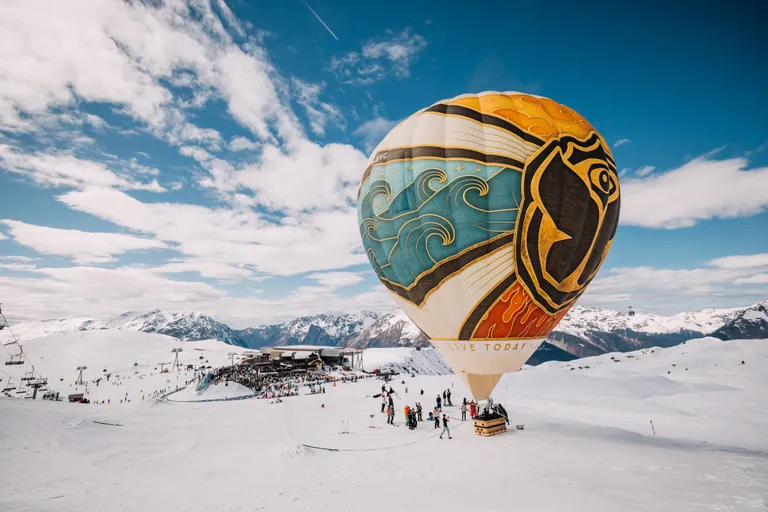
The global festival calendar doesn’t ease into motion—it detonates. And in 2026, that ignition point is high above sea level in the French Alps, where Tomorrowland Winter returns to Alpe d’Huez from March 21–28 with a fully realized, week-long alpine experience that continues to redefine what a destination festival can be.
This is not a spin-off. Not an extension. Not a seasonal experiment.
Tomorrowland Winter has evolved into one of the most ambitious live event formats in the world—an immersive, multi-day convergence of electronic music, mountain culture, and cinematic production design that signals the official beginning of festival season across Europe and beyond.
A Full-Scale Alpine Takeover: What Tomorrowland Winter 2026 Delivers
Set across the expansive ski resort of Alpe d’Huez, Tomorrowland Winter 2026 marks the sixth edition of the event and is expected to host approximately 22,000 attendees across seven days of programming.
But those numbers only tell part of the story.
Unlike traditional festivals confined to a single venue, Tomorrowland Winter unfolds across an entire mountain. Stages are embedded into the terrain itself—perched at altitude, tucked into valleys, and built into the resort’s infrastructure—creating a continuous, fluid experience where music, movement, and environment merge.
By day, attendees move between skiing and snowboarding across one of Europe’s most iconic alpine regions. By afternoon, mountaintop stages come alive. And by night, the resort transforms into a fully activated festival ecosystem of indoor arenas, late-night venues, and high-concept production environments.
This is not a festival you attend. It’s one you inhabit.
The 2026 Lineup: Global Power Meets Underground Precision
Tomorrowland Winter 2026 arrives with a lineup engineered for both scale and credibility—balancing globally dominant headliners with genre-defining underground artists.
At the top of the bill, names like Charlotte de Witte, Steve Aoki, Steve Angello, Dimitri Vegas, Lost Frequencies, and Alok bring global reach and mainstage impact. These are artists built for spectacle, delivering the high-energy, large-format performances Tomorrowland has become synonymous with.
But the depth of the lineup is where Tomorrowland Winter continues to separate itself.
Artists such as Netsky, Agents Of Time, Mind Against, Nina Kraviz, MORTEN, and NERVO provide a more nuanced sonic range—spanning melodic techno, progressive house, drum & bass, and underground techno. Meanwhile, French standouts including Agoria and Dombresky reinforce the event’s connection to its host country, grounding the global lineup with local influence.
Across more than 100 artists and multiple stages, the programming strategy is clear: this is a festival built not just for mass appeal, but for musical credibility across every layer of the electronic spectrum.
A New Mainstage and the Evolution of Tomorrowland’s Production DNA
Each edition of Tomorrowland introduces a new visual language—and 2026 is no exception.
A newly designed MainStage anchors the experience this year, continuing the brand’s progression toward narrative-driven, cinematic stage environments. But this is not simply about scale or spectacle. Tomorrowland’s design philosophy has matured into something far more intentional: world-building.
Every stage, installation, and environment contributes to a cohesive story—one that attendees move through, rather than simply observe.
At Tomorrowland Winter, that storytelling takes on a unique dimension. The alpine setting itself becomes part of the production—snow, elevation, natural light, and landscape all integrated into the visual and sensory design. It’s a format that no flat-ground festival can replicate.
“Orbyz” and the Expansion of the Tomorrowland Universe
Central to the 2026 experience is the continued development of “Orbyz,” a thematic layer that connects design, narrative, and audience immersion.
Rather than existing as a static theme, Orbyz operates as a living framework—guiding the aesthetic, sound, and experiential direction of the event. It reflects Tomorrowland’s broader strategy: transforming festivals into interconnected worlds that extend across multiple events and geographies.
This approach aligns with the larger global concept introduced for 2026 and beyond—an overarching narrative that links Tomorrowland’s various editions into a unified ecosystem.
In practical terms, it means attendees are no longer just attending a single event. They are stepping into a larger, evolving universe that spans continents.
Sold Out, Packaged, and Engineered for Experience
Demand for Tomorrowland Winter 2026 has already exceeded supply, with core festival passes sold out well ahead of the event.
What remains available—and what defines the event’s structure—are bundled packages that combine accommodation, lift access, and festival entry into a single integrated offering.
This model is critical to understanding Tomorrowland Winter’s positioning.
It is not a ticketed event in the traditional sense. It is a curated travel experience.
Attendees are not just purchasing access to music—they are securing a fully managed week that includes lodging, skiing, and festival programming in one seamless framework. Premium hospitality options, upgraded accommodations, and VIP tiers continue to expand, reinforcing the event’s appeal to a global, experience-driven audience.
Tomorrowland Winter vs. Tomorrowland Belgium: Production and ROI
For many, the natural comparison remains Tomorrowland Belgium—the flagship event that has defined the brand for nearly two decades.
But while both share DNA, they deliver fundamentally different value propositions.
Production Scale vs. Environmental Integration
Belgium is unmatched in terms of sheer scale—massive crowds, sprawling grounds, and some of the most elaborate stage builds in the world. Winter, by contrast, trades scale for integration. The environment itself becomes part of the production, creating moments that feel more immersive, more personal, and often more visually striking due to the alpine setting.
Crowd Density vs. Experience Quality
Belgium hosts hundreds of thousands of attendees across multiple weekends. Tomorrowland Winter is capped at around 22,000. The result is a dramatically different crowd dynamic—less congestion, more mobility, and a higher-touch experience across the board.
Cost vs. Value
On paper, Tomorrowland Winter carries a higher upfront cost due to bundled packages. But when broken down—accommodation, lift tickets, transportation within the resort, and full-week programming—the value proposition becomes clear. It is closer to a luxury travel experience than a standard festival expense.
ROI for Attendees
Return on investment isn’t just financial—it’s experiential. Belgium delivers scale, spectacle, and cultural significance. Winter delivers immersion, exclusivity, and a multi-dimensional experience that extends beyond music. For attendees prioritizing depth over density, Tomorrowland Winter offers one of the highest ROI experiences in the global festival market.
The Global Strategy: A Connected Tomorrowland Ecosystem
Tomorrowland Winter 2026 does not exist in isolation. It is part of a rapidly expanding global network that continues to redefine the brand’s reach.
With the introduction of a unified thematic direction for 2026–2027 and expansion into new territories—including a major new festival in Thailand—Tomorrowland is building something larger than a collection of events.
It is constructing a global platform.
Each edition—Belgium, Winter, and beyond—serves as a chapter within a broader narrative, connected through design, storytelling, and shared audience culture. The result is a brand that is no longer tied to a single location, but operates as a worldwide experiential ecosystem.
The Beginning of Festival Season Starts Here
As winter transitions into spring, Tomorrowland Winter stands as the first major signal that festival season has officially begun.
Not quietly. Not gradually.
But with a fully realized, high-altitude experience that combines music, travel, sport, and storytelling into a single, cohesive event.
From March 21–28, 2026, Alpe d’Huez becomes more than a ski resort. It becomes the center of the global electronic music world—if only for a week.
And in that week, Tomorrowland Winter once again proves that the future of festivals isn’t just about bigger stages or louder lineups.
It’s about building worlds people want to step into—and raising the standard for what live experiences can be.